
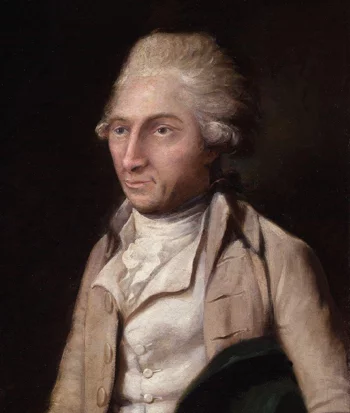
In 1793, a British delegation travelled to Qing China hoping to open diplomatic and commercial doors. One of its members, George Leonard Staunton, later published a detailed account of the encounter. An appealing story is often attached to that visit: the emperor supposedly paid his doctors only while he remained healthy. It makes a superb parable about healthcare incentives. But did the conversation actually happen?
Evidence check. The 1793 embassy and Staunton’s published account are historical facts. The specific exchange about four physicians losing their salaries whenever the emperor fell ill has not been verified in a named primary-source passage. It should not be repeated as an authenticated quotation.
The true part: a British embassy really did meet Qianlong
The Macartney Embassy visited China in 1793. George Leonard Staunton (1737–1801), a medically trained diplomat and scholar, helped document the expedition. His An Authentic Account of an Embassy from the King of Great Britain to the Emperor of China appeared in 1797, drawing on the mission’s papers and observations. The delegation was received by the Qianlong emperor, but its hopes of reshaping trade relations were largely disappointed.
The original article made the scene more vivid than the records justify. It set a supposed conversation inside Beijing’s Forbidden City and supplied confident dialogue. The well-documented imperial reception took place at the emperor’s northern summer court, not in that invented setting. A real embassy does not make every colourful story attached to it authentic.
The doubtful part: the emperor’s four doctors
In the familiar version of the tale, Qianlong tells a British visitor that four personal physicians receive a stipend while he is healthy, but lose it when he becomes ill. The punchline is irresistible: reward doctors for preserving health, not for treating disease.
Yet a good historical attribution needs a book, a volume, a page and a passage that can be checked. I could confirm Staunton’s 1797 account and the diplomatic visit; I could not establish that this particular conversation, its four-doctor detail or the supposed direct quotations appear in a traceable primary record. Absence of a located citation is not proof that no such conversation occurred. It is a reason to label the story unverified, rather than narrate it as fact.
Would the idea work even if the story is apocryphal?
Suppose a physician earns a fixed amount for keeping a patient well, rather than a fee each time the patient needs treatment. In theory, the clinician has more reason to invest in prevention. But the incentive changes again if payment is cut off whenever illness occurs: many illnesses are unpredictable, genetic or unavoidable. Punishing a doctor every time a patient becomes sick rewards luck and the selection of unusually healthy patients.
Economists distinguish several real payment models. Each solves one problem and creates another:
- Fee for service: pays per consultation or procedure. It can reward access and activity, but may encourage unnecessary services.
- Salary: pays for time or a role rather than for a specific intervention. It reduces incentives to provide extra billable treatment, but offers less direct reward for individual outcomes.
- Capitation: pays a set amount per enrolled patient. It may encourage prevention and efficient care, but creates a risk of underserving expensive patients unless funding is risk-adjusted.
- Outcome or quality incentives: pay for selected measures. They can shift attention towards desirable outcomes, but badly designed indicators invite gaming and neglect of what is not measured.
The crucial missing variable: patient risk
Consider two doctors, each treating 100 patients. One serves generally healthy adults; the other serves frail patients with multiple chronic diseases. If salaries depend only on how many patients remain illness-free, the second doctor can be financially punished despite providing better clinical care. A meaningful comparison must adjust for baseline health, age, disease burden and other case-mix factors, while measuring outcomes the clinician can actually influence.
This is not merely a theoretical concern. A 2022 systematic review examined risk adjustment in capitation payments. A separate review of value-based payment initiatives found that combining population-based funding with explicit quality incentives is plausible and has shown encouraging, but heterogeneous, results. Neither review supports the fantasy of solving healthcare by withholding every doctor’s pay whenever anyone becomes sick.
A more defensible version of the emperor’s thought experiment
Instead of paying doctors only when nobody falls ill, a modern contract could combine a predictable base payment, adjustment for patient complexity, rewards for evidence-based prevention and patient-reported outcomes, and safeguards against delaying care. Hospital admissions, mortality and complications still matter, but their interpretation must recognise uncertainty and the patients’ starting conditions.
The useful question is therefore not Should physicians be punished when patients get sick? It is How can payment reward better care without rewarding risk avoidance, excessive treatment or manipulation of the numbers?
Verdict
The Chinese-emperor anecdote survives as a thought experiment, not a verified transcript of 1793. Its central intuition, that incentives affect medicine, is worth keeping. Its proposed mechanism, stopping doctors’ pay during illness, is far too crude. The historically responsible version is also the more interesting one: a brilliant-sounding story fails its source check, but opens a serious question about how we measure good healthcare.
Sources and verification
- George Leonard Staunton, An Authentic Account of an Embassy (1797). Primary account of the Macartney mission; no precise citation for the four-doctor anecdote has been established.
- Khezri et al. (2022), systematic review of risk adjustment in primary-care capitation.
- Cattel & Eijkenaar (2020), systematic review of value-based payment programmes.