
Society
Can a Billionaire Start a Country With Its Own Laws?
SpaceX created Starbase, while Próspera tests different laws. Can billionaires buy a country, or is a durable deal with an existing state more valuable?
The most interesting questions often hide in plain sight. We challenge familiar assumptions about health, happiness and everyday life, and investigate what the evidence actually shows.
Finland tops the happiness rankings. But in one 22-country study, Egypt ranked 21st on one wellbeing measure and third on another. Can rankings guide a move?
Read the ArticleSpaceX created Starbase, while Próspera tests different laws. Can billionaires buy a country, or is a durable deal with an existing state more valuable?
Is air cleaner on higher floors? Usually for traffic pollution, but window orientation, PM2.5 and ventilation can change the answer. What to check before choosing.
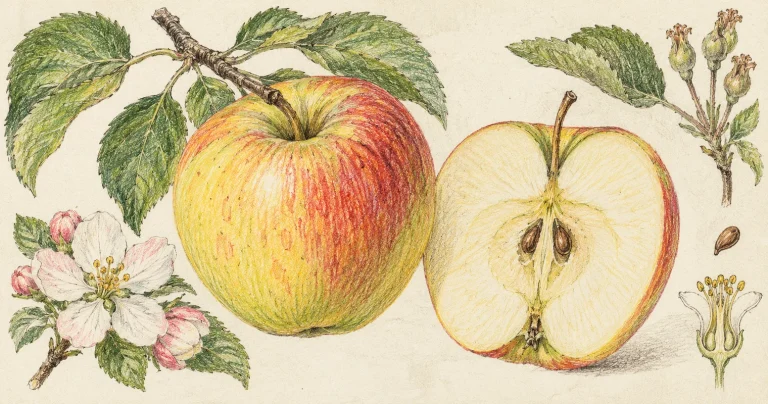
Apples and blueberries can breathe at the same rate yet keep for very different lengths of time. Explore ethylene, fruit storage and an old Welsh proverb.
Laboratory data for 943 foods. Compare 165 with observed eating-day portions, or download all 9,248 derived food–analyte profiles. Not a safety ranking.
Coffee may affect sleep even when you feel rested. What trials reveal about dose, timing, decaf, and why the 8.8-hour rule is not a safe cutoff.
Key takeaways from recent research on Mike's Balance.
Its Cantril Ladder asks people to rate their life as a whole from 0 to 10 rather than measuring daily mood, laughter or stress.
In a small experiment involving 23 healthy young men, 400 mg of caffeine 12 hours before bed reduced deep sleep by about 21 minutes, with no statistically significant change in overall self-rated sleep quality.
They can change short-term fluid retention, but a meaningful everyday health or performance benefit has not been established.
Do healthy adults need electrolytes every day? We examine fluid retention, exercise, heat and the evidence behind routine electrolyte drinks.
THE BIGGER PICTURE
At 35, imagine two groups of 100 French men. Apply 2020–2022 death rates: 94 managers and senior professionals reach 65, but only 85 blue-collar workers do. Nine extra survivors. Is it the work itself, or the income, education and health people bring to it? The same question complicates comparisons of elite athletes across sports.
Illustrative survival from age 35 to 65 for French men, applying 2020–2022 age-specific mortality rates. These figures do not measure the causal effect of occupation.
Use our interactive relocation calculator to compare purchasing power, work, life evaluation, healthy years, healthcare, bureaucracy and safety across 54 countries.
THE UNEXPECTED FINDING
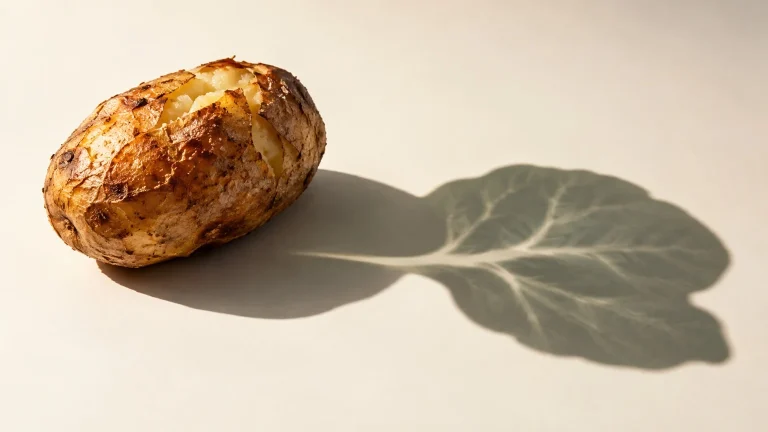
Spinach contains 5.1 times as much cadmium as baked potato per kilogram. Yet in modelled US eating-day portions, potato contributes 2.3 times more. Same foods, opposite ranking. Only the basis of comparison changed. Neither result tells you which food is safer. Our interactive atlas lets you compare 165 foods, including cases where the evidence is too uncertain to rank them.
FDA food measurements combined with US reported eating-day portions: 25 g raw spinach and 285 g baked potato. This compares amounts of cadmium, not food safety.
Can repeat blood pressure readings change your category? NHANES data on 6,100 adults show how US and European rules differ. Explore our interactive calculator.
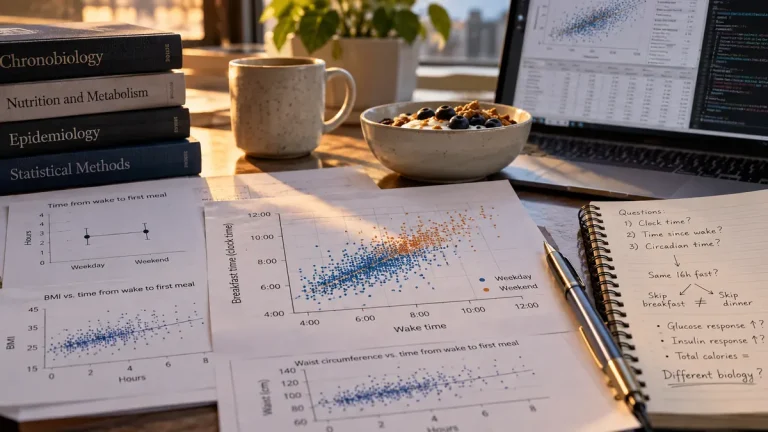
Is breakfast at 10 a.m. early or late? Explore the wall clock, sleep timing and biological clock, and the limits of NHANES meal-timing research.
How much water should you drink? A data-driven guide to hydration, thirst, urine markers, food, exercise, heat, and when more water is not better.
Does mouth taping improve sleep or breathing? We review the trials, who may benefit, why nasal obstruction matters, and the safety risks.