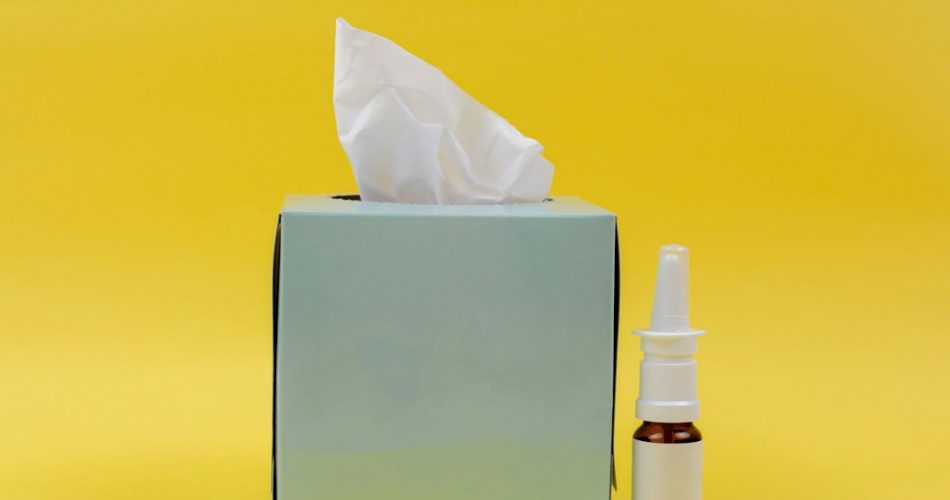
Short answer: No treatment has been shown to reliably eliminate a common cold in 24 hours. But the first day is not wasted. You can ease a blocked nose, sore throat or headache, protect your sleep and, in some cases, identify an infection that needs time-sensitive treatment. The key is to separate feeling better today from making the virus disappear sooner.
Most colds are caused by respiratory viruses. Symptoms often build over the first two or three days, so a person who feels worse tomorrow has not necessarily done anything wrong. CDC guidance describes an illness that usually resolves without a specific cure. [1]
Your first 24 hours: a realistic plan
First: make sure it really looks like an ordinary cold
A gradual runny nose, sneezing and a sore throat fit a common cold, but symptoms overlap with influenza and COVID-19. An abrupt fever with marked aches, a relevant exposure or a higher risk of complications changes the decision. Consider testing and contacting a clinician promptly. Influenza antivirals work best when started within about 48 hours of symptom onset; eligible people with COVID-19 also have a limited early-treatment window. Those medicines treat specific infections, not ordinary rhinovirus colds. [2]
During the day: treat the symptom that matters most
- Blocked nose: try a saline spray or drops. If using a nasal-rinsing bottle, use only sterile, distilled or previously boiled and cooled water, and clean the device. Plain unboiled tap water is not safe for nasal irrigation. [3]
- Headache, aches or fever: paracetamol (acetaminophen) or ibuprofen may help when appropriate for your health and medications. Follow the label and avoid taking two products containing the same active ingredient. These relieve symptoms; they do not eradicate the virus. [2]
- Sore throat: warm or cool drinks and simple lozenges can make swallowing more comfortable. Choose what feels soothing rather than forcing large amounts of liquid.
- Cough: honey may provide some relief, especially at night. Evidence is clearest in children aged one year or older and concerns symptom relief, not faster viral clearance. Never give honey to an infant under one year. [4]
- Fatigue: take the pressure off, eat normally if hungry and drink enough to avoid dehydration. There is no solid evidence that drinking beyond normal needs flushes a cold out faster.
What about decongestants? Some nasal decongestants can offer modest short-term relief, but trials do not show that they cure colds, and the patient-relevant benefit is uncertain. They are not suitable for everyone; check with a pharmacist if you have hypertension, cardiovascular problems, glaucoma, pregnancy or take other medicines. Follow the product’s maximum duration for nasal sprays to avoid rebound congestion. [5]
Tonight: optimise comfort, not a miracle cure
Make sleep easier with a saline spray, a clean cool-mist humidifier if the air is dry, a comfortable room temperature and whatever fluid you would normally drink. Avoid scalding bowls of steam: burns are a real risk, and hot steam has not been shown to end a cold. Sleeping well may help you cope with symptoms, but no trial establishes that one unusually long night of sleep cures an established infection.
What might actually shorten a cold?
Zinc: a signal worth taking seriously, not a guarantee
The 2024 Cochrane review pooled eight treatment trials with 972 participants. Zinc was associated with colds lasting an average of 2.37 fewer days than placebo (95% confidence interval: 0.53 to 4.21 days shorter). That looks substantial until the uncertainty is examined: the studies were extremely heterogeneous (I² = 97%), and Cochrane rated confidence in the effect low. The average must not be read as a prediction for an individual. [6]
There is a cost: across 16 treatment studies, non-serious adverse events such as unpleasant taste and gastrointestinal discomfort were more frequent with zinc (risk ratio 1.34, 95% CI 1.15 to 1.55). Oral formulations and doses differed widely, so the review does not establish a reliable self-treatment regimen. Do not use intranasal zinc: it has been linked to potentially persistent loss of smell. If considering an oral product, ask a pharmacist about interactions and whether it is appropriate for you. [6, 7]
Editor’s evidence check: a pooled average can be statistically different from zero and still be too uncertain to justify a confident promise. Formulation, timing, trial quality and adverse effects matter as much as the headline number.
Vitamin C: prevention studies are not first-day treatment studies
Taking vitamin C regularly has shown a small reduction in cold duration in some trials, but starting large doses after symptoms appear has not consistently shortened the illness. That difference is easy to lose in advertising. The relevant question here is what works after today’s first sneeze, and the treatment evidence is not persuasive. Megadoses may cause gastrointestinal effects and are not a proven shortcut. [8]
Popular shortcuts that fail the evidence test
- Antibiotics: ineffective against uncomplicated viral colds and capable of causing harm, including antibiotic resistance. Use them only when a clinician identifies a bacterial indication. [2]
- Antihistamines alone: a Cochrane review found only a small, short-lived improvement in adults’ overall symptoms, without a clinically important improvement in individual nasal symptoms; they are not a cold cure. [9]
- “Sweating it out”, extreme hydration or detox products: no credible evidence that these clear a respiratory virus within a day.
- Feeling better after a remedy: useful for comfort, but not proof that viral replication ended. A cold naturally fluctuates, and expectation affects symptom ratings.
Can stress cause a cold without a virus?
No. Stress is a possible modifier of susceptibility, not an infectious agent. An often-cited 1991 experiment measured stress in healthy volunteers, then deliberately exposed 394 of them to respiratory viruses under controlled conditions. The incidence of clinically verified colds ranged from approximately 27% in the lower-stress group to 47% in the higher-stress group. This is a meaningful association, but stress itself was not randomly assigned, so it does not establish the effect of a stress-reduction treatment. Everyone in the relevant groups was exposed to a virus. [10]
This also corrects a claim made in an earlier version of this article: chilling, worry or an unsettling memory does not by itself manufacture a rhinovirus infection. Cold weather can change behaviour and exposure patterns, and psychological stress may alter the host response. Neither observation makes the virus optional.
When “just a cold” needs medical attention
Seek urgent medical attention for difficulty breathing, chest pain, new confusion or other severe symptoms. Contact a clinician for dehydration, fever lasting more than four days, symptoms persisting beyond ten days without improvement, deterioration after an initial recovery, or worsening of an existing condition. People at higher risk from influenza or COVID-19 should seek advice promptly, even with apparently mild initial symptoms. [2]
For young children, over-the-counter cough-and-cold combination products may be unsafe; US guidance does not recommend them under age six, and infant warning thresholds differ by age. Seek paediatric advice rather than applying adult treatment plans to a child. [2, 11]
Can you go back to work once you feel better?
Feeling better is not the same as being non-infectious. US CDC guidance recommends returning to normal activities when symptoms have been improving overall and you have been fever-free without fever-reducing medication for at least 24 hours, followed by five days of additional precautions. Local public-health advice and workplace rules may differ. [12]
The bottom line
If you need to function tomorrow, the highest-value actions today are simple: identify any warning signs or need for testing, target the symptoms disrupting eating or sleep, and rest without expecting an instant cure. Zinc has a potentially interesting but uncertain effect on duration; most other remedies mainly change how a cold feels. A comfortable night is achievable. A guaranteed one-day cure is not.
Sources and evidence notes
- [1] CDC, About Common Cold (updated 2026). Natural history and symptoms.
- [2] CDC, Manage Common Cold (updated March 2026). Treatment, testing and warning signs.
- [3] FDA, Is Rinsing Your Sinuses With Neti Pots Safe? Irrigation-water safety.
- [4] Cochrane, Honey for acute cough in children (2018). Six small trials, 899 participants.
- [5] Cochrane, Nasal decongestants in monotherapy (2016). Limited evidence of symptomatic benefit.
- [6] Nault et al., Cochrane, Zinc for prevention and treatment of the common cold (2024). RCT synthesis; treatment-duration heterogeneity I² = 97%.
- [7] NIH NCCIH, The Common Cold and Complementary Health Approaches. Zinc safety.
- [8] Cochrane, Vitamin C for preventing and treating the common cold (2013). Prevention vs treatment.
- [9] Cochrane, Antihistamines for the common cold (2015). Eighteen trials, 4,342 participants.
- [10] Cohen, Tyrrell & Smith, Psychological stress and susceptibility to the common cold (NEJM, 1991). Prospective viral-challenge study, not stress randomisation.
- [11] FDA, Should You Give Kids Medicine for Coughs and Colds? Paediatric medication safety.
- [12] CDC, Preventing Spread of Respiratory Viruses When You’re Sick (2025). Return-to-activities guidance.
Evidence scope: This article distinguishes symptom relief, duration of illness and prevention. A trial finding a reduction in average duration is not evidence of a one-day cure; results from one age group or formulation should not automatically be transferred to another.
Editorial history: Originally published in 2024 under the byline of Mikhail Faranov, MD. Substantially rewritten in October 2026 under the editorial responsibility of Ilya Nikitin, Ph.D..