Short answer: Much of Andrew Weil’s anti-inflammatory diet overlaps with dietary patterns that now have a solid evidence base: vegetables, fruit, legumes, whole grains, nuts, olive oil and fish, with less ultra-processed food. But some of the stronger “anti-inflammatory” explanations, routine supplement suggestions and the idea that facial appearance reveals biological age go beyond what the evidence can support.
This article is not an endorsement or rejection of Andrew Weil’s broader integrative-medicine philosophy. It separates the parts of his longevity approach that align with modern evidence from the parts that are better viewed as personal or theoretical recommendations.
First: looking younger is not the same as being biologically younger
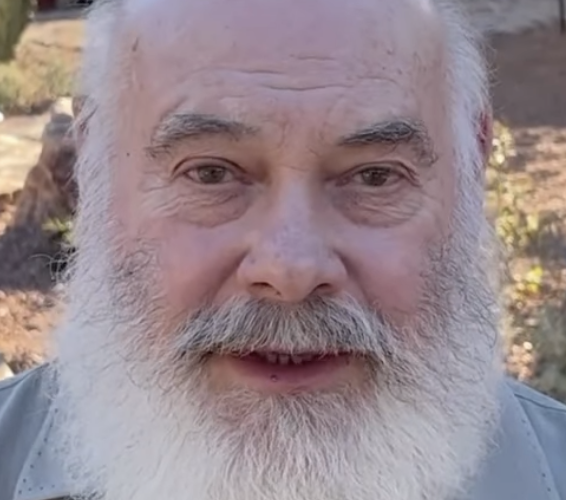
An older version of this article used face-age software on videos of Andrew Weil and calculated that he appeared many years younger than his chronological age. It then suggested that this might reflect the effectiveness of his health practices.
That inference is not valid.
A model estimating age from a face measures visual age-related features. Lighting, camera quality, facial structure, hair, weight, expression and model bias can all affect the estimate. Looking younger can be an interesting phenotype, but it is not a validated measurement of cardiovascular health, cancer risk, metabolic age or remaining lifespan.
So I would now describe that old experiment as an appearance-age comparison, not a biological-age test.
What is Weil’s anti-inflammatory diet?
Weil’s food pyramid emphasizes vegetables and fruit, legumes, whole or minimally processed grains, nuts and seeds, extra-virgin olive oil, fish, soy foods, tea, herbs and spices. It limits heavily processed foods and treats sweets as occasional foods.
Structurally, that is close to a Mediterranean-style pattern, although Weil adds his own preferences about specific foods, supplements and “anti-inflammatory” mechanisms.
Andrew Weil’s anti-inflammatory food pyramid.
The part with the strongest evidence: the overall dietary pattern
The evidence is much stronger for dietary patterns than for individual foods described as “anti-inflammatory.”
A 2026 meta-analysis of 33 randomized controlled trials found that Mediterranean-diet interventions reduced several inflammatory biomarkers, including high-sensitivity C-reactive protein, IL-6 and IL-17, compared with control diets. Not every inflammatory marker improved, which is important: inflammation is a network of processes, not one number that a diet simply turns down.
2026 meta-analysis of Mediterranean-diet randomized trials.
A 2026 umbrella review likewise found the most consistent anti-inflammatory signal for Mediterranean-style dietary patterns, while evidence for many other named “anti-inflammatory diets” was thinner or more heterogeneous.
Umbrella review of dietary patterns and inflammatory markers.
Where Weil’s explanation becomes too broad
Weil has often described chronic inflammation as a root cause of many age-related diseases. Inflammation does participate in atherosclerosis, metabolic disease, autoimmune disorders and many other conditions.
But “inflammation is involved” should not be simplified to “inflammation is the root cause.” Cardiovascular disease, cancer, dementia and aging have different causal architectures, with genetics, metabolism, immune function, environment, vascular biology and many other mechanisms interacting.
Diet can improve risk factors and inflammatory markers without proving that inflammation was the single upstream cause of the disease.
Vegetables, legumes, whole grains and nuts
This is one of the least controversial parts of the program.
Dietary patterns rich in minimally processed plant foods repeatedly associate with better cardiometabolic outcomes, and randomized Mediterranean-diet interventions support favorable effects on several established risk factors.
The benefit does not require assigning a special anti-inflammatory power to kale, berries or a particular spice. The pattern works through multiple routes: fiber, food structure, unsaturated fats, micronutrients, energy density and displacement of less favorable foods.
Olive oil and fish
Extra-virgin olive oil and fish also fit comfortably within an evidence-based Mediterranean-style pattern.
Randomized-trial meta-analyses suggest that Mediterranean diets supplemented with olive oil can improve some inflammatory and endothelial markers, although study heterogeneity is high.
Fish provides protein and long-chain omega-3 fatty acids. That does not mean every person following the diet needs a high-dose fish-oil supplement. Supplement decisions should depend on the clinical goal, diet and individual risk rather than on a universal “anti-inflammatory” formula.
What about red wine?
Weil’s pyramid historically lists red wine as optional. I would treat that part differently today.
Wine contains polyphenols, but it also contains ethanol. The existence of potentially useful plant compounds does not turn alcohol into a longevity intervention.
If someone does not drink alcohol, there is no health reason to start drinking red wine for resveratrol or “anti-inflammatory” effects. The same broad dietary pattern can be followed without alcohol.
Does “organic” make the diet healthier?
Weil frequently prefers organic foods. Choosing organic produce can reduce exposure to some pesticide residues and can reflect environmental or agricultural preferences.
But the evidence does not justify making organic status a prerequisite for a healthy anti-inflammatory diet. Eating a wide variety of conventional vegetables and fruit is preferable to eating fewer plant foods because organic versions are unavailable or expensive.
What about herbs, spices and mushrooms?
Turmeric, ginger, garlic, tea, mushrooms and other foods contain bioactive compounds with interesting laboratory effects. They can fit very well into a healthy diet.
But mechanistic activity does not mean that unlimited amounts prevent chronic disease. In a real diet, their strongest role may simply be that they add variety, flavor and plant compounds to a generally high-quality eating pattern.
The 4-7-8 breathing technique
Weil also popularized 4-7-8 breathing: inhale for four counts, hold for seven and exhale for eight.
For years the technique had much more popularity than direct evidence. That is beginning to change. Small randomized studies have reported improvements in anxiety or other subjective outcomes in specific patient groups, including a 2026 randomized trial in people with tinnitus.
At the same time, a controlled physiology study comparing several breathing patterns found that simple breathing at six breaths per minute increased heart-rate-variability measures more than 4-7-8 breathing. So there is no strong basis for claiming that the exact 4-7-8 ratio is uniquely optimal.
Comparison of 4-7-8 and other slow-breathing patterns.
2026 randomized 4-7-8 breathing study in tinnitus.
What I would keep from Weil’s approach
The strongest parts do not require accepting every claim of integrative medicine.
A diet centered on minimally processed plant foods, legumes, nuts, olive oil and fish is well supported. Regular physical activity, sleep, stress management and maintaining social connection are also sensible health priorities.
Slow breathing can be a low-cost relaxation tool. Herbs and spices can make healthy food more enjoyable.
What I would not infer
I would not infer that looking younger proves slower biological aging.
I would not assume that every recommended supplement is necessary because it appears in an “anti-inflammatory” program.
I would not treat inflammation as the single cause of aging or chronic disease.
And I would not use one public figure’s appearance or longevity as evidence that a particular health routine works.
Bottom line
Andrew Weil’s anti-inflammatory diet has a substantial evidence-based core because it overlaps strongly with Mediterranean-style eating.
The strongest evidence supports the overall pattern, not a claim that particular foods, supplements or breathing ratios have unique anti-aging properties.
And the old face-age experiment on this page should not be interpreted as biological-age evidence. It measured appearance, which is interesting, but scientifically a different variable.
Sources
2. Dietary Patterns Associated With Anti-inflammatory Effects: An Umbrella Review. 2026.
3. Comparing Square, 4-7-8 and Six-Breaths-per-Minute Breathing. 2025.
4. 4-7-8 Breathing Exercise in Tinnitus: Randomized Controlled Study. 2026.