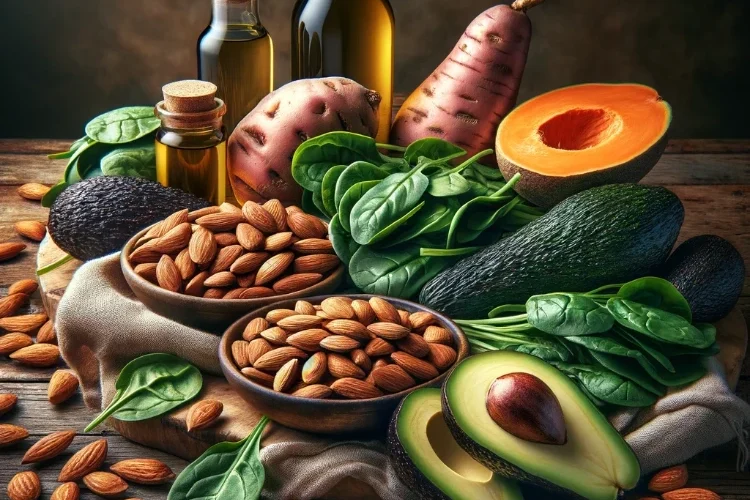
Short answer: vitamin E is essential for health, but human studies do not show that vitamin E reliably increases testosterone in men. In fact, one long-term controlled study found slightly lower testosterone in men taking alpha-tocopherol, while another randomized trial found no meaningful effect on testosterone. That makes vitamin E a poor candidate for a generic ‘testosterone booster.’
What the human studies actually found
The most useful evidence comes from human trials rather than animal experiments. In an analysis from the Alpha-Tocopherol, Beta-Carotene Cancer Prevention Study, 100 older male smokers who received alpha-tocopherol were matched with 100 men receiving placebo. After adjustment for baseline values and other factors, mean testosterone was 539 ng/dL in the vitamin E group versus 573 ng/dL in the placebo group. The authors concluded that long-term alpha-tocopherol supplementation decreased circulating androgens in this population. PubMed: Effects of long-term alpha-tocopherol supplementation on serum hormones in older men.
A separate randomized controlled pilot trial followed men receiving vitamin E or placebo and found no significant effect on serum testosterone or DHEA. PubMed: randomized controlled trial of alpha-tocopherol and serum androgens.
Observational data point in the same general direction but are harder to interpret. In NHANES III, higher serum alpha-tocopherol was associated with lower testosterone, estradiol and SHBG among smokers, but not clearly among non-smokers. Because this was observational, it cannot prove that vitamin E caused the hormone differences. PubMed: alpha-tocopherol and sex steroid hormones.
So does vitamin E boost testosterone?
Based on the available human evidence, the most defensible answer is no established testosterone-boosting effect. Vitamin E may influence steroid metabolism, and the direction may depend on dose, smoking status, baseline nutrition and other factors, but the clinical literature does not support taking vitamin E simply to raise testosterone.
This is a good example of why biochemical plausibility and animal findings are not enough. Vitamin E is an antioxidant and participates in many cell processes, but that does not mean that supplying more of it will push testosterone upward in a healthy person who is already vitamin-E sufficient.
What vitamin E is actually for
Vitamin E is a fat-soluble nutrient whose main recognized biological role is antioxidant protection of cell membranes. The U.S. National Institutes of Health lists the recommended intake for adults as 15 mg of alpha-tocopherol per day. Deficiency is uncommon in healthy people but can occur in disorders that impair fat absorption. Good food sources include wheat-germ oil, sunflower seeds, almonds, hazelnuts and some vegetable oils. NIH Office of Dietary Supplements: Vitamin E fact sheet.
More is not automatically better
High-dose supplementation is not biologically neutral. The NIH notes that large supplemental doses can increase bleeding risk. In the SELECT trial, more than 35,000 men were randomized to selenium, vitamin E, both, or placebo. With extended follow-up, the vitamin-E-only group taking 400 IU per day had a 17% higher prostate-cancer incidence than placebo (hazard ratio 1.17). This does not mean normal dietary vitamin E is harmful; it shows that pharmacological supplement doses cannot be assumed to behave like food intake. National Cancer Institute: SELECT trial.
Practical interpretation
If the goal is testosterone, the evidence points away from treating vitamin E as a direct booster. Correcting a genuine nutritional deficiency is different from taking additional vitamin E on top of an adequate diet. Testosterone is influenced by age, energy balance, sleep, body composition, illness, medications and many other factors, so a low laboratory value deserves a broader explanation rather than a single-supplement fix.
For me, the interesting part of the vitamin E story is therefore not ‘how much does it raise testosterone?’ but the opposite question: why can an essential antioxidant alter steroid metabolism without predictably improving androgen levels? That is a much better fit to the human data and remains an open mechanistic question.
Medical information
This article may contain published medical evidence, clinical context, personal observations, or hypotheses. These are not equivalent levels of evidence. See the Editorial & Medical Review Policy and Medical Disclaimer. This content is educational and does not provide an individual diagnosis or treatment plan.