Life doesn’t always feel soft and sweet, or as easy as a day at the beach. Some days feel more like a roller coaster at Linnanmäki amusement park: a plunge, a spin, a rush of adrenaline tangled up with the terror of losing control. Now imagine reaching the very top of the ride and hearing one word: CANCER. For a teenager, everything that once felt solid can suddenly give way, as though the whole train were hurtling toward the ground.
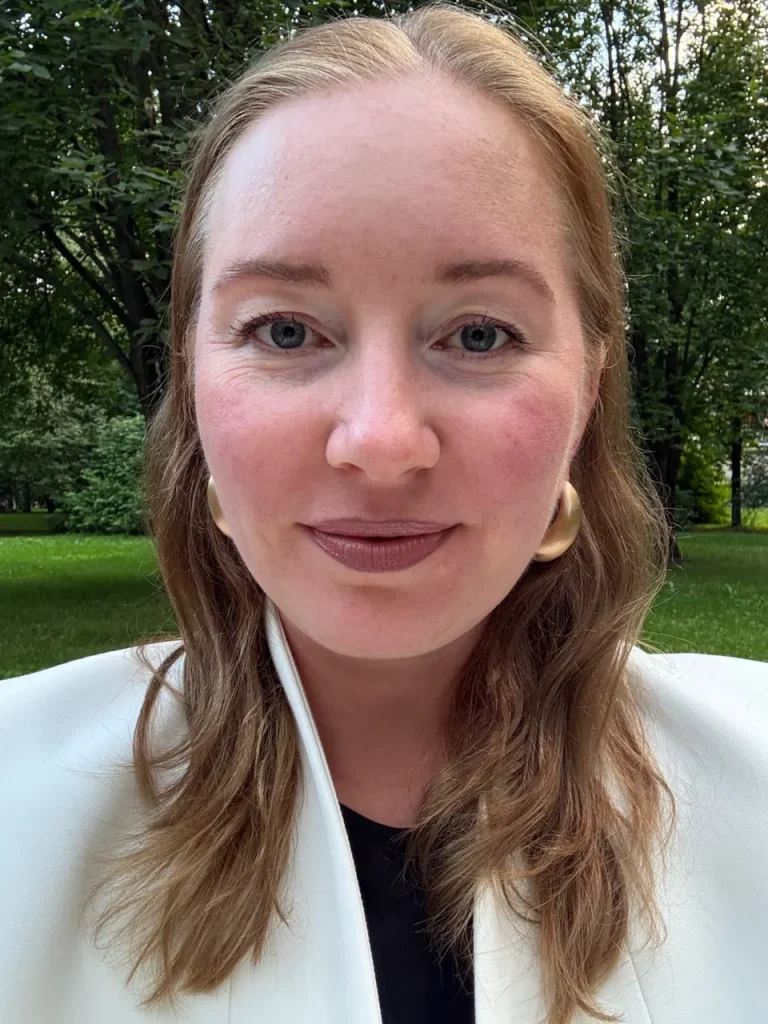
How do you find your footing again? How do you begin to trust yourself, understand what’s happening and find enough balance to carry on with school, friendships, relationships and plans for the future? I’m Irina Pavlova, a psychologist, and those are the questions I want to talk through with you.
I’ll sometimes speak to you directly. Imagine we’re sitting together somewhere comfortable. You’re settled into a soft sofa with your favorite drink, and I’m talking with you, sharing what I’ve learned in my work and helping you understand what you’re feeling.
We’ll also look at ways to support yourself and reduce some known risks without letting fear of illness take over your life.
So, let’s begin.
When cancer enters a teenager’s life
Cancer may enter your own life or the life of someone you love. Often it arrives suddenly, without warning or invitation.
Even the word ‘cancer’ can change the atmosphere in a room.
Sometimes all it takes is a doctor saying the diagnosis aloud for life to split into two parts: before and after.
Yesterday was full of ordinary things: school, friends, an exam, a crush on someone in another class, an argument with your parents, summer plans, the Finnish vanha tanssi school dance, a new phone, a fashionable sweater, a pimple on your nose and that utterly unbearable geography teacher. Today there’s a word that makes all of yesterday seem suddenly small.
You might be the one who’s been diagnosed. Or it might be Mom or Dad, a brother, sister or friend. Perhaps you learn that a grandparent, an aunt or another relative had cancer, and a different fear takes hold: ‘Am I going to be next?’
Then come the questions you may be afraid to ask aloud. The shock may be so great that you can’t even put them into words:
- Why did this happen?
- Could it have been prevented?
- Could I die?
- Could the person who’s ill die?
- Is it hereditary?
- What if I worry too much?
- What if I once wished something bad would happen to them?
- Why do I love my sick relative and feel angry with them at the same time?
- Why do I still want to go out and laugh when someone at home is suffering? Why do I feel ashamed of that?
- Do I even have the right to live my own life?
Let’s start with the most important thing.
Cancer isn’t a punishment for having the ‘wrong’ thoughts
Cancer can’t be explained by a single psychological cause. It generally involves a complex mix of biological factors, heredity, random changes in cells and environmental exposures. Lifestyle and infections matter for some cancers. But fears, resentment and unresolved emotional conflicts have not been established as independent causes of cancer.
There is no scientific basis for saying someone developed cancer because they ‘couldn’t forgive’, ‘suppressed their anger’, ‘didn’t love themselves’, went through a divorce, argued with their parents, or failed to think positively enough.
That kind of explanation can be tempting. It seems to hand back some control: if I can find the emotional cause of the illness, perhaps I can prevent it from happening again.
But with that apparent control comes guilt. Does it mean the person who got sick somehow caused their own illness?
For a teenager, that idea can be particularly harmful.
You’re still learning where your responsibility ends, where an adult’s begins and what nobody can control. So when a parent falls ill, it’s easy to think: Mom got cancer after that awful argument we had. Or: I was angry with my brother so many times. Now he has cancer.
No.
Your thoughts do not create a tumor in another person.
Your anger does not cause cancer.
An argument isn’t a magical mechanism for producing cancer.
Chronic stress can affect sleep, hormonal responses, the immune system, behavior and general health. But that doesn’t justify the equation ‘stress = cancer’.
Cancer is a complex group of diseases involving changes in cells. Risk may be influenced by heredity, infections, carcinogens, lifestyle, the environment, random cellular changes, and many other factors. Sometimes medicine can explain risk factors fairly well. Sometimes there is no specific answer to the question, ‘Why this person?’
It’s hard to live with that uncertainty. We often prefer a frightening explanation to no explanation at all. But not knowing why someone became ill is better than accepting a false story that makes them guilty of their own disease.
So what about psychosomatics and the mind–body connection?
Psychosomatics doesn’t have to mean ‘You got sick because you lived the wrong way.’ I’m talking here about how feelings affect well-being, not claiming that the mind causes cancer.
A more useful question is: what’s happening in my mind, my body and my life right now? Or more simply: WHAT DO I FEEL IN MY BODY? Where am I tense? What can I actually feel?
Mind and body are constantly interacting. Months of anxiety can change the way you sleep and eat, how active you feel and how well you concentrate. If anxiety goes on for months, you don’t have to face it alone. It can seriously disrupt your sleep, energy and everyday life.
We’re equipped to react to sudden danger: running from an aggressive dog, swimming across a river, pulling a friend out of a fight or standing up for ourselves. A brief surge of adrenaline, norepinephrine and cortisol helps mobilize our responses. We may feel stronger, quicker, braver. And an imagined threat can set off a real stress response, too, although its strength and duration vary with the situation and the person. An imaginary bear can make your heart pound even when there’s nothing there to escape.
But if you live at that pitch of fear all the time, your brain begins adapting your behavior to a bear that seems to be charging at you constantly, though there’s nowhere you can actually run.
For example:
- Fear may lead someone to avoid doctors altogether.
- Or it may have the opposite effect: checking every mole and lymph node, getting repeated tests, and rushing to the doctor at every strange sensation or little click.
Burying your feelings doesn’t mean they’ll turn into a tumor. It may mean, though, that living with those feelings becomes harder.
That’s what psychological support is for when cancer enters someone’s life: not to uncover some guilty emotion, but to help the person stay involved in their own life while facing illness.
Those are two very different aims.
Instead of ‘Which inner conflict gave me cancer?’,
you might ask: What’s happening to me now? What am I afraid of? What am I angry about? What am I trying to control? What am I not saying? What do I need most? How can I help myself through this?
What if you’ve been diagnosed with cancer?
Being a teenager means gradually claiming the right to make your own decisions. It’s a natural part of growing up. You want to choose how you look, who your friends are, where you go, who you love and what you do.
And then illness interrupts. Doctors arrange tests. Parents discuss treatment; they’re nervous, perhaps frightened, perhaps so caught up in their own emotions that they pull away. You have medicines to take. Your routine changes. Your appearance may change too: hair loss, spots, swelling, shifts in weight. You may feel weak or nauseated, be in pain or find that your body can’t do what it once could.
Just when you want to say ‘It’s my decision now!’, your life fills with other people’s ‘You have to.’
It can feel as though your body no longer belongs to you. So if you’re angry with yourself or with the world, I understand. You have every right to that anger.
You may be angry with doctors, parents, healthy classmates, your own body, God or fate. Angry with people who complain about a school test when you’re facing yet another hospital appointment. You might be jealous, frightened, exhausted or simply sick of talking about cancer.
None of those feelings makes you a bad patient or a bad person. They do not mean you aren’t fighting hard enough.
You don’t have to be a hero
Cancer comes wrapped in the language of battle: ‘You’re strong.’ ‘You have to beat it.’ ‘Attitude is everything.’ ‘Don’t fall apart.’ That can become a dangerous kind of pressure.
What sounds like encouragement to someone else may sound like an order to you: I mustn’t be afraid. I mustn’t get tired. And if treatment fails, it will mean I didn’t fight hard enough.
Believe me, illness isn’t an exam in strength of character. You can desperately want to live and still be terrified. You can have faith in treatment and cry. You can feel ready to fight one day and hate the entire world the next. Nobody owes the world a graceful performance of being seriously ill.
Fear of death
Adults are often afraid to talk about death. I’ve had people in their sixties sitting across from me in my office, people with four grandchildren and a lifetime of experience, who still find it frightening to speak of dying.
They may worry that mentioning death will only frighten a child more.
But I suspect you’ve thought about it already. Perhaps dozens of times, perhaps hundreds. When adults fall silent, the fear doesn’t disappear. You’re simply left to face it alone.
So, to the adults reading this: if a teenager asks, ‘Am I going to die?’, try not to rush in with ‘Don’t be silly. Of course not!’
You could say instead: ‘I understand why you’re scared. Let’s ask the doctor what we know about your illness and your treatment at the moment. I’m here, and we can talk about it.’
That’s more trustworthy than a promise nobody can guarantee.
‘My body’s betrayed me’
Cancer can also change the way you feel about your own body. It starts to seem like the enemy. People examine it, inject it, operate on it. Scars appear. It may look different, smell different, even feel different from the inside.
For a teenager already painfully aware of how they look, that can be especially hard.
But this isn’t a question of asking your body, ‘Why did you do this to me?’ Your body isn’t to blame. It hasn’t betrayed you. Sometimes things go wrong inside cells and the body can’t put them right. Bodies are vulnerable to that. Mistakes, breakdowns, humiliations and setbacks are part of life. You can let those setbacks take over your life, or make room for them in your story and keep going.
The task, little by little, is to stop waging war against your own body and live the life that’s here. Yes, it may be a different life. Yes, it may feel uncomfortable right now. But it’s still your life.
You don’t have to love every scar. For now, a quieter thought may be enough: my body is going through very difficult treatment. It isn’t my enemy.
If your mother or father has cancer
When a parent becomes ill, one of childhood’s reassuring beliefs can collapse: grown-ups are big, they know what to do, and they’ll keep me safe.
Suddenly you see your parent frightened, exhausted, perhaps physically weak. They seem different from the person you knew. It’s deeply unsettling.
And the roles at home may shift before anyone notices. You start behaving like the adult. You don’t burden Mom with your problems. You do the chores, watch the younger children, overhear adult conversations, try to hold Dad together. You stop asking for money. You stop mentioning what’s troubling you. You don’t admit you’re frightened. All your energy goes into protecting the grown-ups, while your own place as a child quietly disappears.
Gradually a rule forms in your head: There’s no room for me right now. Few things can hurt a child more deeply when serious illness enters a family.
Of course the family may need your help. But helping isn’t the same as becoming another adult. You still have a right to school, friends, dates, music, games, sports, laughter, irritation, your own worries and even a little foolishness.
Your parent’s illness doesn’t put your growing up on hold.
How can I laugh when Mom is ill?
You may feel guilty for being happy. In some ways, it resembles survivor’s guilt.
Your mind keeps dividing the world in two: she’s suffering, and I’m enjoying myself. That’s wrong. She’s suffering!
The unspoken conclusion follows: then I should be suffering too.
So you cancel plans, stop yourself laughing, turn down invitations and feel guilty after a good day. In doing so, you cut yourself off from the very things that help you release tension: laughter, conversation, warm company and other people’s support.
But your suffering isn’t a medicine you can give someone else.
If Mom is having chemotherapy, missing a birthday party won’t reduce her side effects. If Dad is recovering from surgery, a good grade, a date, a soccer game or an evening with friends isn’t a betrayal.
Sometimes the healthiest thing you can do is carry on living.
If your brother or sister has cancer
The feelings here can be more tangled still. You may love your brother yet hate that everything now revolves around him.
You might be terrified that your sister will die and furious when your parents cancel your plans because of her, yet again.
You may feel sorry for your sick sibling and resent the presents and attention they receive.
That doesn’t make you a terrible person.
It’s called ambivalence: feeling opposite things toward the same person or situation at once.
Love doesn’t erase irritation.
Fear doesn’t erase jealousy.
Compassion doesn’t erase anger.
Research and clinical guidance for families affected by childhood cancer recognize that siblings, too, can feel fear, sadness, anxiety, jealousy and guilt. The child who isn’t ill needs support as well.
If your friend has cancer
One mistake I often see in my practice is that people begin treating someone as a diagnosis rather than as a person.
Before the illness, you talked about games, music, school, relationships, memes and summer plans. Afterwards, every conversation can turn into a medical interview: What did the tests show? What did the doctor say? How do you feel? When’s the next treatment? Somewhere along the way, your friend disappears behind the patient, reduced to a set of medical readings.
You could simply ask: ‘Do you feel like talking about cancer today, or would you rather talk about something else?’
You can talk about treatment. Or spend ten minutes arguing about a movie. Sit together without saying anything. Send silly memes. Play online. Share some school gossip. Friendship doesn’t have to become another medical appointment.
Your friend may need to feel something that’s become terribly rare: with you, I’m still myself.
What not to say to someone with cancer
This is worth thinking about. People are vulnerable even at the best of times. And phrases such as:
- Everything will be fine.
- Just stay positive.
- You’re strong. You’ll get through this.
- Someone I know had exactly the same thing…
- At least this type of cancer responds well to treatment.
- Don’t think about bad things.
- You mustn’t get upset.
may be meant kindly but often make someone feel even more alone.
A person says, ‘I’m frightened.’ Someone replies, ‘Don’t be.’ The message underneath is: stop feeling what you’re feeling.
It’s better to be honest, with them and with yourself: ‘Yes, it’s frightening. I don’t know what to say, but I can stay with you. Would you like to talk or be distracted for a while? What would help right now? Would you like me just to listen?’
Often, sitting quietly beside someone does more good than trying to cheer them up.
What if they don’t want to talk?
Don’t try to break down the door. Silence may be the only control a person feels they still have. They may be confused, frightened or not yet able to take in what’s happened.
You might say: ‘I can see you don’t want to talk right now. I won’t push you. But if you change your mind, I’m here.’
Then give them space. Don’t interrogate them, demand confidences or take offense: ‘I’m only trying to help!’ Help that someone has to accept no longer feels like help.
There are, however, situations in which adults need to intervene. If a teenager talks about suicide, harms themselves, or is in immediate danger, urgent help is needed: contact emergency services or a local crisis service, rather than waiting for a routine appointment. If the teenager stops eating or drinking, or their condition deteriorates sharply, they also need urgent medical assessment.
Anger: ‘Why me?’
Anger is one of the most natural feelings when cancer touches your life. It often arises when we come face to face with something we cannot change, whether we’re young or old.
If a problem can be solved, we act. If it can’t, the urge to do something is still there, with nowhere to go. It turns into familiar questions: Why? What did I do to deserve this? It’s not fair! And sometimes the answer is simply: No. It isn’t fair.
Illness doesn’t follow a moral scorecard. Good people get sick. Bad people sometimes stay healthy. Children get sick. Athletes get sick. People who ‘did everything right’ get sick. Not every event comes with an explanation that feels just.
Sometimes growing up emotionally isn’t about finding a beautiful meaning in what happened. It’s about being able to say: I didn’t choose this. But I can gradually choose how to live with it.
Where can that anger go?
People tell us to forgive and let go. It’s easy to say. Much harder to do. You’re angry with the world for being unfair, with the person who fell ill, with the doctors because they can’t do everything or invent a less painful treatment, and with everyone around you who is healthy. None of that anger is strange.
You don’t have to let go of it on command, or instantly forgive the world. You can notice your anger and express it safely: talk, write, draw, listen to music, dance to heavy rock or move your body if you’re well enough. Ask a friend, psychologist, coach or teacher for help, and talk about it as much as you need. If it feels overwhelming, pause, breathe more slowly or speak to someone you trust. Shouting, punching a bag and running until you’re exhausted have not been shown to reduce anger reliably. If you’re undergoing cancer treatment, check any physical activity with your medical team first.
I often repeat a saying in my sessions: ‘Pain shared by two is pain cut in half.’ Sharing a powerful feeling can make it seem smaller, leaving a little more room for life.
If anger, pain or helplessness is flooding you now, try saying aloud, ‘I hate that this happened.’ Say it into the room as many times as you need. Repeat it if you want to. Then notice what happens in your body and in yourself.
Fear of inherited cancer: ‘If someone in my family had it, will I get it too?’
No. Having a relative with cancer doesn’t mean you’ll certainly develop it. Family history can matter, but ‘cancer has happened in my family’ is very different from ‘cancer will happen to me’.
Most childhood cancers aren’t explained by simple patterns of inheritance. Some inherited genetic syndromes do, however, increase the risk of particular tumors.
Instead of endlessly searching the internet, try gathering your family history. Who had cancer? What kind? How old were they? Did several relatives have similar tumors? Was anyone diagnosed unusually young?
Then, if appropriate, bring those details to a doctor or clinical geneticist. Genetic risk is a medical question, not something to guess at. Genetic counseling and carefully chosen tests can sometimes clarify the picture, although a negative test doesn’t always rule out inherited risk.
When fear of cancer becomes health anxiety
After someone close to you becomes ill, you may start checking your own body constantly. What’s that lump? Why does my head hurt? Has this lymph node always felt like that? Is this mole really normal?
Then your favorite AI assistant or all-knowing Google offers a dozen frightening possibilities. Your anxiety shoots up. Your hands shake. You check again, pay closer attention to every sensation, and become more frightened. STOP.
Breathe in, and let the breath out slowly. Again: a loooong breath in, then a sloooow breath out.
It’s easy to become trapped in an anxious loop of self-diagnosis. The more you check, the more there is to worry about. Paradoxically, repeated checking often keeps health anxiety going rather than calming it.
A better approach is to tell an adult you trust and speak to a doctor about any symptom that genuinely worries you, even if you’re scared.
Then follow the advice you receive rather than checking and diagnosing yourself around the clock.
Cancer prevention without fear of living
Here’s something we can’t escape: nobody can bring their chance of developing cancer down to zero.
But some known risks can be reduced. Don’t smoke or use tobacco. Don’t start drinking alcohol; if you already drink, ask a professional to help you stop. Stay physically active, eat a balanced diet, protect your skin from excessive UV exposure and avoid tanning beds. See a doctor about persistent or unusual symptoms that concern you, and know the important parts of your family’s medical history. Just as importantly, stay curious about life: create things, travel, spend time with friends, explore, talk, learn. Stay interested in the world around you.
One more thing is easily forgotten: looking after your health mustn’t become a cult of control. You can eat well, exercise and have check-ups, yet spend every day terrified of getting sick.
Then life stops being about health and starts revolving around the avoidance of death.
Life is meant to be lived: interesting, difficult, bewildering, funny. Health matters, but so do ease, curiosity and the moments that aren’t governed by fear.
Taking care of your mental health isn’t cancer prevention
Let’s be precise. Psychotherapy can’t promise you’ll never develop cancer. Working through a grievance is no shield against a tumor. But looking after your psychological well-being can help you look after yourself.
For instance, it may help you:
- notice when you’re exhausted,
- ask for help,
- avoid using alcohol or nicotine to cope with difficult feelings,
- get enough sleep,
- maintain relationships,
- avoid spending years treating yourself with relentless cruelty,
- understand your boundaries,
- live with uncertainty,
- go to necessary medical appointments instead of avoiding them out of fear. This is where working through inner conflicts can really matter.
Which inner conflicts should teenagers pay attention to?
Inner conflicts can touch the most painful parts of our lives. They don’t cause cancer, but they can make life hard long before any illness appears.
- ‘I must never be difficult’: putting other people’s needs ahead of your own, again and again.
- ‘I’m not allowed to be angry’: believing anger is dangerous or forbidden.
- ‘I’m responsible for my parents’ moods’: trying to manage adults’ emotions for them.
- ‘If I relax, something bad will happen’: a belief that can lead to constant hypervigilance.
- ‘I have to control everything’: a serious illness can make the limits of control painfully clear.
- ‘I can’t ask for help’: facing every hardship alone.
- ‘My problems aren’t important enough’: a feeling that often grows when someone at home is seriously ill.
- ‘If I’m happy while someone else is suffering, I’m a bad person’: slowly denying yourself permission to live.
These are worth addressing. Not to win some magical guarantee of health, but so that life becomes more than a long attempt to get through the day.
How to ask for help as a teenager
Does saying ‘I need to see a psychologist’ feel difficult? It may be easier to begin with what you’re experiencing:
- I can’t stop thinking that Mom is going to die.
- Since my brother got sick, I keep checking my own body.
- I can’t sleep.
- My friends have pulled away because I’ve been so angry.
- I feel nothing, and that frightens me.
- I can’t talk about this with my parents because they’re already struggling.
- I need an adult I can talk to without worrying that I’ll upset them.
Saying any of those things is already asking for help.
You could speak to a parent, another relative, a doctor, a psychologist at the hospital, a school counselor or another adult you trust.
Getting help matters especially if fear, anxiety or low mood begins to interfere with sleep, eating, school, friendships or leaving home, or if you start thinking about harming yourself.
‘I don’t want to burden anyone’: what can a teenager do?
One of the traps of serious illness looks almost noble: everyone is trying to protect everyone else. Mom won’t tell her child how frightened she is. Dad won’t tell Mom how exhausted he feels. The teenager keeps quiet because ‘they have enough to deal with’. The brother says nothing because ‘I’m not the one who’s sick’. Five people can live in the same apartment and still go through it all alone.
A family needs moments when talking is possible. And you might even be the one to begin.
You might ask:
- What’s the hardest part for you right now?
- What are you most afraid of?
- Would you like help, or would you rather I just listened?
- Is there something we’ve stopped talking about because of the illness?
- What do we miss about our everyday family life?
The last question matters especially. It can bring something of ordinary life back into the family, sometimes giving the person who’s ill something steady to hold on to as well.
Here’s how that might look.
Don’t let home become another hospital ward
Even when someone at home is having treatment, there should be times when cancer isn’t the center of everything. A family dinner with absolutely NO talk about illness. Two hours watching a movie before bed, then discussing it together among a pile of cushions. A birthday. A walk, even if it’s only for an hour. Whenever it’s possible and suits everyone, make room for jokes, music, familiar conversations and small pleasures. Plan something for tomorrow. Talk about what’s happening in town. Draw, make things, cook together, read, or write each other letters and post them into a homemade family letterbox.
You and the person who’s ill are human beings first: alive, feeling, warm, sensitive. Don’t remove joy or curiosity from your days. Don’t let your lives become a list of diagnoses and procedures. If you can, fill them with laughter, the smell of fresh baking and handmade gifts. If there’s enough energy today, make a small celebration of something.
Familiar family rituals may provide emotional support to someone who’s ill, help them get through treatment and make plans. Joy and a positive attitude, however, don’t determine the outcome of treatment.
A person is more than their diagnosis. And a family is more than one member’s illness.
How do you live after cancer has entered your world?
In my practice, I meet people who respond in two opposite ways. One says, ‘Now I see that nothing matters.’ The other says, ‘Now I must live every second perfectly.’
I tell them straight away: both ways of thinking can become traps.
You don’t have to find your life’s purpose the moment cancer touches your world, travel the globe or take up meditation at five in the morning. Sometimes a smaller question will do: if life is finite, what matters TO ME today?
- Not to humanity in general. To me.
- Whom do I want to be with?
- What interests me?
- How do I want to treat my body?
- What relationships do I want to build?
- What do I put up with only because I’m afraid to change something?
- Where am I living someone else’s life?
- What have I wanted to say for a long time?
- What would I like to try?
- What would I like to stop doing?
Cancer makes us face the fact that life is finite. But that isn’t a reason to live in permanent fear. It can be a reason to be more present in the life you’re actually living.
I’ve sometimes seen something surprising in my practice: facing illness makes a person think more carefully about how they want to live. Some clients have said that it was only after their diagnosis that they began listening to their own needs and allowing themselves a fuller, more interesting life.
Hope isn’t a promise
There’s a word I’d like to reclaim from the world of sugary slogans: hope.
Hope doesn’t mean everything is bound to turn out well. Nobody can promise that.
Hope may sound like this: Today we’re doing what we can. Today there’s treatment. Today I have people beside me. Today I can ask the doctor a question. Today I can be afraid and still take the next step.
Sometimes hope feels immense. Sometimes it’s no bigger than the day in front of you.
As a psychologist, my job is to believe in the people who come to see me and help them recover some of the steadiness they may have lost during treatment. Hope, and trust in the people around them, can sometimes help someone get through another day. But neither replaces medical treatment or determines the prognosis.
What I want every teenager to remember
If cancer has come into your life, whether your own or that of your friend, mother, father, brother or sister, it doesn’t have to become your whole identity.
You are allowed to be afraid. To be angry. To cry. To not want to talk. To ask difficult questions and ask for help. To laugh. To fall in love. To make plans. To forget about the illness sometimes. To go on living.
One of the most important things you may learn is to stop asking, ‘What did I do wrong to cause this?’
Instead, try asking yourself:
- What’s happening to me right now?
- What really is within my control?
- What isn’t within my control?
- What help do I need?
- What truly matters to me?
- What part of that can I do today?
- How do I want to spend this day?
There’s no contract we can sign with life that guarantees we’ll never get sick. We could eat well, try never to get angry, work through our childhood, think positively and go to every checkup, but none of it can promise absolute safety.
But we do have choices. We can care for our bodies, turn to modern medicine, reduce risks we know about and ask for help. We can work through fear and inner conflicts. We can build relationships where people can speak honestly. We can learn to stay with difficult feelings rather than spend a lifetime trying to outrun them. We don’t have to turn illness into blame, prevention into an obsession, or someone with cancer into nothing more than a patient. And we don’t have to live as though we’re simply waiting for disaster.
Being healthy doesn’t mean having a guarantee that you’ll never fall ill.
Psychological well-being includes the ability to stay in touch with yourself, with other people and with life, even when so much is beyond your control.
And if you’re a teenager encountering cancer for the first time, perhaps this is what you most need to hear: you don’t have to shut down your feelings or stop being afraid in order to carry on living.
IT’S OKAY TO BE AFRAID. IT’S OKAY NOT TO KNOW WHAT HAPPENS NEXT. IT’S OKAY TO NEED HELP AND TO ASK FOR IT. IT’S OKAY TO HOPE.
AND TO KEEP LIVING ALL THE SAME.
With a hug, Irina Pavlova, psychologist and Mike’s Balance author.
Scientific sources
The sources below support the medical facts and safety advice. Irina Pavlova’s psychological observations and interpretations should not be read as findings of the studies cited.
- NCI: Stress and Cancer
- American Cancer Society: Do Feelings and Attitudes Have an Effect on Cancer?
- NCI: Talking to Children about Your Cancer
- NCI: Support for Siblings When a Brother or Sister Has Cancer
- NCI: Genetic Testing Fact Sheet
- Kjærvik & Bushman (2024): Meta-analysis of anger management, 154 studies
- NHS: Health Anxiety
- NHS: Where to Get Help for Self-Harm
- American Cancer Society: Physical Activity When You Have Cancer
This article is about psychological support. It does not replace advice from your treating doctor or a mental health professional. If someone’s life is in immediate danger, seek emergency help.